Reuters Journalists Jailed In Myanmar Over Secrets Act
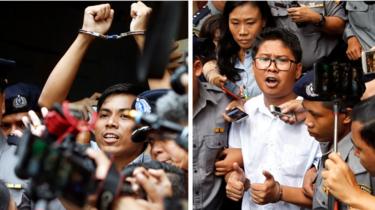 Kyaw Soe Oo (left) and Wa Lone say they were framed by the police
A court in Myanmar has sentenced two Reuters journalists to seven years in prison for violating a state secrets act while investigating violence against the Rohingya minority.
They have maintained their innocence, saying they were set up by police.
The case has been widely seen as a test of press freedom in Myanmar.
"I have no fear," Wa Lone, one of the two journalists, said after the verdict. "I have not done anything wrong. I believe in justice, democracy and freedom."
"Today is a sad day for Myanmar, Reuters journalists Wa Lone and Kyaw Soe Oo, and press freedom anywhere," Reuters editor-in-chief Stephen Adler said.
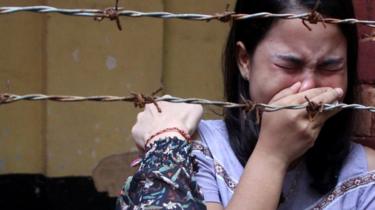 Kyaw Soe Oo's wife, Chit Suu Win, broke down in tears on hearing the verdict
Judge Ye Lwin told the court in Yangon the pair had "intended to harm the interests of the state".
"And so they have been found guilty under the state secrets act," he said.
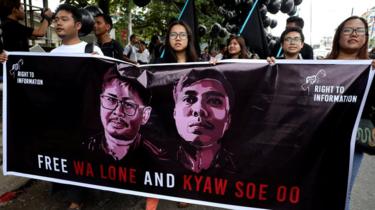 Ahead of the verdict, people marched to show solidarity
During their investigation, they were offered documents by two police officers, but were arrested immediately afterwards for the possession of those documents.
Authorities later launched their own probe into the killings, confirming the massacre took place and promising to take action against those who had taken part.
'A crushing blow to freedom'
Nick Beake, BBC Myanmar correspondent, YangonWa Lone and Kyaw Soe Oo bowed their heads as the verdict was delivered while their families broke down in tears in court.
The reporters have always insisted they were framed. Wa Lone - who missed the birth of his first child while being detained - protested his innocence once again as he was led away.
Many will see this verdict as a crushing blow to freedom of the press in Myanmar and another setback for democracy, three years after Aung San Suu Kyi's party triumphed in free elections.
Last week, UN inspectors called for Myanmar's top generals to stand trial for genocide for the crimes committed against the Rohingya - the very subject these reporters were investigating.
'Deeply troubling'
The verdict has been widely criticised by observers and human rights groups."We are extremely disappointed by this verdict," Britain's ambassador to Myanmar, Dan Chugg said according to Reuters.
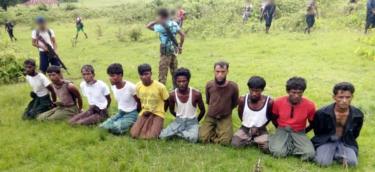 These are the men whose deaths the Reuters journalists were investigating
The UN's resident and humanitarian co-ordinator in Myanmar Knut Ostby said the UN had "consistently called for the release" of the journalists and that "a free press is essential for peace, justice and human rights for all. We are disappointed by today's court decision".
"The outrageous convictions show Myanmar courts' willingness to muzzle those reporting on military atrocities," Brad Adams, Asia director at Human Rights Watch, said.
"These sentences mark a new low for press freedom and further backsliding on rights under Aung San Suu Kyi's government."
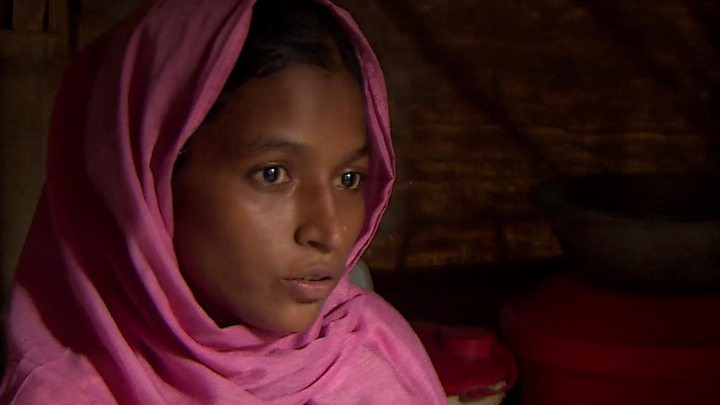 Rohingya girls in danger: The stories of three young women
The ruling comes a year after the crisis in Rakhine state came to a head when a Rohingya militant group attacked several police posts.
The military responded with a brutal crackdown against the Rohingya minority.
Media access to Rakhine is strictly controlled by the government so it is difficult to get reliable news from the region.
BBC


Comments